
In today’s classrooms, technology is everywhere. From interactive whiteboards to AI-driven learning platforms, we’ve grown accustomed to a high-tech approach to education. Yet, as we navigate this digital landscape, it’s worth considering a gentle shift back toward high-tactile experiences that engage students’ senses and foster deeper connections with each other.
This shift stems from growing concerns about the unintended consequences of technology overuse in the classroom. While digital tools offer flexibility and efficiency, a growing body of research warns that excessive screen time can hinder student attention, reduce deep learning, isolate students socially, and negatively impact mental health. Stanford professor Antero Garcia argues that technology in the classroom may worsen learning outcomes by increasing distractions, limiting deep thinking, and undermining effective teaching practices (Garcia, 2023). Likewise, a Canadian study found that students using more than five hours of technology per day reported poor school connectedness, along with negative effects on sleep and emotional regulation (Sampasa-Kanyinga et al., 2022). These findings suggest that educators must be more purposeful in their use of technology to ensure it does not undermine student well-being and learning.
One way to foster this intentionality is by rebalancing classroom practices: doing less of some things and more of others. Instead of beginning with technology as the default tool, educators can start by clarifying their pedagogical goals, focusing on student relationships, and emphasizing the value of concrete, sensory-rich experiences. This shift means using screens more selectively and relying more on teacher-led strategies that build engagement and connection.
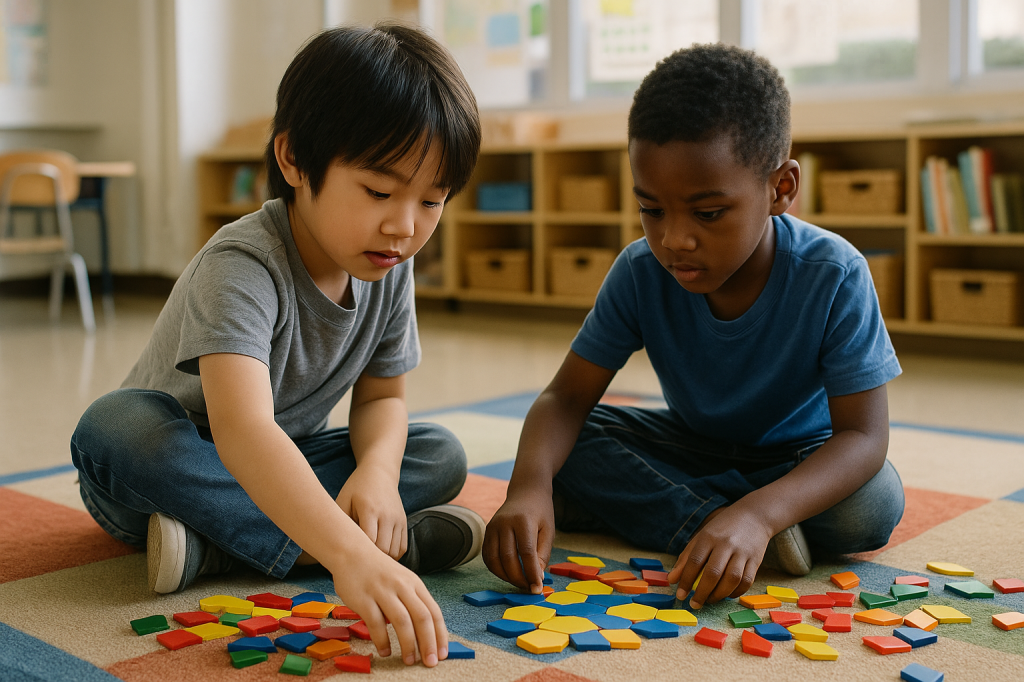
Take mathematics, for example. Rather than defaulting to pre-made PowerPoint slides to demonstrate a mathematical algorithm, teachers might incorporate manipulatives—physical objects like patterns blocks or fraction bars—to help students model and understand mathematical ideas. These tactile experiences allow students to visualize abstract concepts in tangible ways.
Similarly, while virtual math games have their place, there’s something uniquely engaging about activities like card games, board games, or hands-on puzzles. These low-tech strategies promote collaboration, critical thinking, and a sense of play—all of which deepen learning and make it more memorable through peer interaction.
Another gentle shift involves balancing personalized online programs like Khan Academy or IXL with more interactive, peer-based learning. Working through structured problem sets with a partner or engaging in individualized or group-based real-world math projects can help students apply their knowledge in authentic contexts and practice essential collaboration skills.
By thoughtfully integrating more tactile, interactive experiences, we can create a learning environment that reduces unnecessary screen time and strengthens both collaboration and school connectedness. After all, education is not just about absorbing information—it’s about engaging meaningfully with the world around us.
References
Garcia, A. (2023, April 10). Technology might be making education worse. Stanford Report. https://news.stanford.edu/stories/2023/04/technology-might-be-making-education-worse
Sampasa-Kanyinga, H., Hamilton, H. A., Goldfield, G. S., & Chaput, J.-P. (2022). Problem technology use, academic performance, and school connectedness among adolescents. International Journal of Environmental Research and Public Health, 19(4), 2337. https://doi.org/10.3390/ijerph19042337
 Behind the Curriculum Curtain
Leave a comment